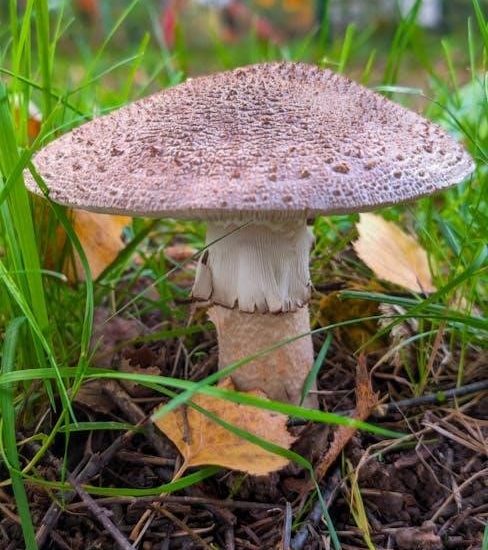
Embarking on a journey into the fungal kingdom is incredibly rewarding! Discover the captivating world of mushrooms, from vibrant Chanterelles to unique species, offering a fascinating foraging experience.
What is Mycology?
Mycology is the scientific study of fungi, encompassing their genetic and biochemical properties, taxonomy, and their use to humans as a source for medicines, food, and enzymes.
It explores the diverse world of mushrooms, molds, and yeasts, revealing their crucial roles in ecosystems. Understanding mycology is fundamental for safe foraging, allowing identification of edible and poisonous species. This knowledge unlocks the secrets of the fascinating fungi kingdom, enriching the foraging experience.
The Allure of Wild Mushrooms
The captivating world of wild mushrooms holds a unique appeal for foragers. Their diverse colors, shapes, and smells spark imagination, offering a rewarding connection with nature.
Finding clusters of edible mushrooms, like the vibrant Saffron Milky Caps, provides bounty for delicious meals. This pursuit blends adventure, culinary delight, and a deeper understanding of the forest ecosystem, making mushroom foraging a truly enchanting experience.
Identifying Edible Mushrooms: A Beginner’s Guide
Accurate identification is paramount for safe foraging. Utilize resources like field guides and apps, and always prioritize caution when selecting mushrooms for consumption.
Importance of Accurate Identification
Misidentification can have severe consequences, as the majority of mushroom-related fatalities stem from consuming poisonous species, particularly those within the Amanita genus.
Careful study of distinctive features is crucial. Relying on general rules is insufficient; subtle differences can distinguish edible varieties from deadly look-alikes like the Destroying Angel.
Prioritize safety above all else. A mushroom guide or identification app is essential, but expert confirmation remains the most reliable method for ensuring a safe and enjoyable foraging experience.
Resources for Mushroom Identification
Numerous tools aid in accurate mushroom identification. Comprehensive field guides provide detailed descriptions and illustrations, crucial for beginners.
Modern technology offers convenient alternatives. Mushroom identification apps utilize image recognition, but should be used cautiously and as a supplement, not a replacement, for traditional methods.
Combining resources maximizes accuracy. Cross-referencing information from multiple sources, alongside expert guidance, is highly recommended for safe and confident foraging.
Field Guides
Traditional field guides remain invaluable resources for mushroom hunters. These books offer detailed descriptions, covering cap shape, gill attachment, and spore print characteristics.
High-quality illustrations and photographs are essential. They aid in visual comparison, helping to distinguish between similar species. Look for guides specific to your geographic region for optimal accuracy.
Experienced foragers often rely on multiple guides; This cross-referencing approach enhances confidence and minimizes the risk of misidentification, ensuring a safe foraging experience.
Mushroom Identification Apps
Smartphone apps are increasingly popular tools for mushroom identification. Utilizing image recognition technology, these apps can provide potential matches based on photographs.
However, apps should never be the sole source of identification. They are prone to errors and should be used as a starting point for further research, not a definitive answer.
Always verify app suggestions with reliable field guides and expert knowledge. Combining technology with traditional methods ensures a safer and more accurate identification process.
Popular Edible Mushroom Species
Discover culinary delights! Chanterelles, Ceps (Porcini), Saffron Milky Caps, Morels, and Oyster Mushrooms are highly sought-after edible species, prized for their unique flavors.
Chanterelles
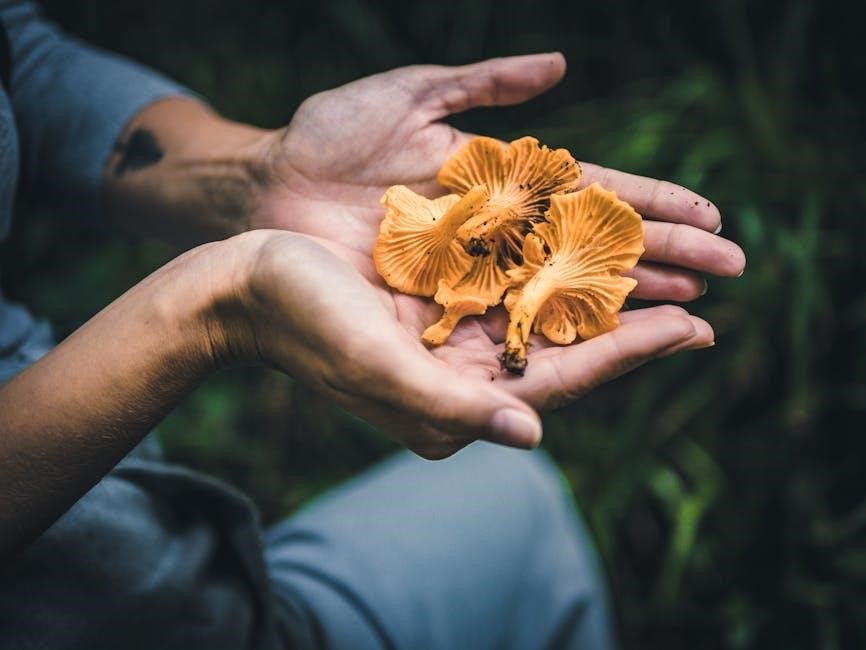
Chanterelles are renowned for their fruity aroma and vibrant golden hue. These mycorrhizal mushrooms form symbiotic relationships with trees, typically found in forests during warmer months; They boast a funnel shape and distinctive false gills that run down the stem.
Their mild, apricot-like flavor makes them incredibly versatile in the kitchen. However, be cautious of look-alikes! Proper identification is crucial, as some similar species can cause gastrointestinal upset. Chanterelles are often found in clusters, making foraging quite productive.
Ceps (Porcini)
Ceps, also known as Porcini, are highly prized edible mushrooms celebrated for their robust, nutty flavor. They feature a thick stem and a bulbous cap, ranging in color from reddish-brown to tan. Found beneath coniferous and deciduous trees, they are a true gourmet delight.
Identifying Ceps requires attention to detail, particularly examining the pores beneath the cap – they should be white initially, turning yellowish with age. Their dense texture holds up well to various cooking methods, enhancing any dish.
Saffron Milky Caps
Saffron Milky Caps stand out with their brilliant orange coloring on the forest floor, making them relatively easy to identify. A key characteristic is the way the gills stain green when bruised or damaged, releasing a vibrant, milky latex.
These mushrooms offer a mild flavor and dense texture, making them an excellent edible species. Often found in clusters, they provide a rewarding harvest for foragers, perfect for adding a unique touch to culinary creations.
Morels
Morels are highly prized edible mushrooms, renowned for their distinctive honeycomb-like cap structure. They present a nutty, earthy flavor that elevates any dish. Finding them is a true reward for foragers, often appearing in springtime near trees like ash, elm, and apple.
However, caution is key! Proper identification is crucial as false morels exist. Experienced guidance is recommended for beginners to confidently distinguish these culinary gems.
Oyster Mushrooms
Oyster mushrooms are a delightful find for beginner foragers, known for their fan-shaped caps and delicate flavor. They commonly grow on decaying wood, appearing in clusters, making them relatively easy to spot. Their colors range from white to grey and even pink or yellow!
These versatile mushrooms are fantastic sautéed, stir-fried, or added to soups. They offer a mild, slightly seafood-like taste, enhancing various culinary creations.
Dangerous Mushrooms to Avoid
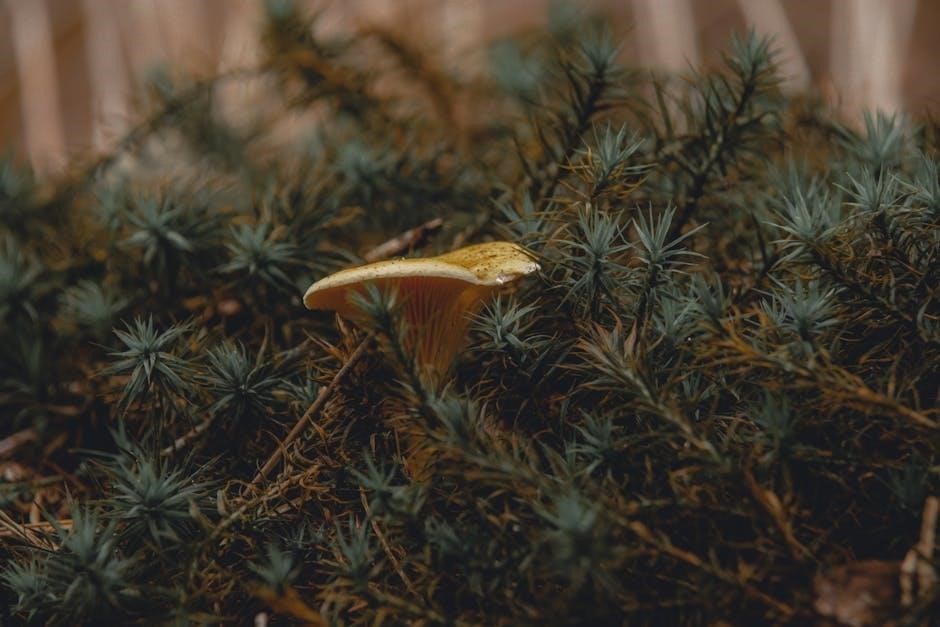
Certain mushrooms pose serious health risks, even leading to fatality. The Amanita genus, like the Destroying Angel, is particularly dangerous due to mistaken identification.
Amanita Species (Destroying Angel)
The Amanita genus contains some of the most poisonous mushrooms globally, with the Destroying Angel (Amanita virosa) being a prime example. These fungi are responsible for the majority of mushroom-related deaths, often stemming from misidentification by inexperienced foragers.
They typically appear near mature trees and can even be found in residential yards. Their seemingly innocent, pure white appearance belies a deadly toxicity. Ingestion can cause severe liver and kidney damage, often proving fatal. Extreme caution is paramount when encountering any white Amanita species.
Identifying Features of Amanita
Recognizing Amanita species requires careful observation. Key features include a volva – a sac-like structure at the base of the stem, often buried underground. Also, look for a ring or annulus on the stem, a remnant of the partial veil.
Gills are typically white and free from the stem. However, these features can vary, making identification challenging. Always examine the entire mushroom, including the base, and never rely on a single characteristic.
Other Highly Poisonous Mushrooms
Beyond Amanita, several other mushrooms pose significant risks; The deadly Galerina marginata, often found on wood, contains the same toxins as the Destroying Angel. Cortinarius species can cause delayed kidney failure, sometimes years after ingestion.
False Morels (Gyromitra) are also dangerous, requiring careful differentiation from true Morels. Always exercise extreme caution when encountering unfamiliar mushrooms, and prioritize accurate identification before consumption.
Key Features for Mushroom Identification
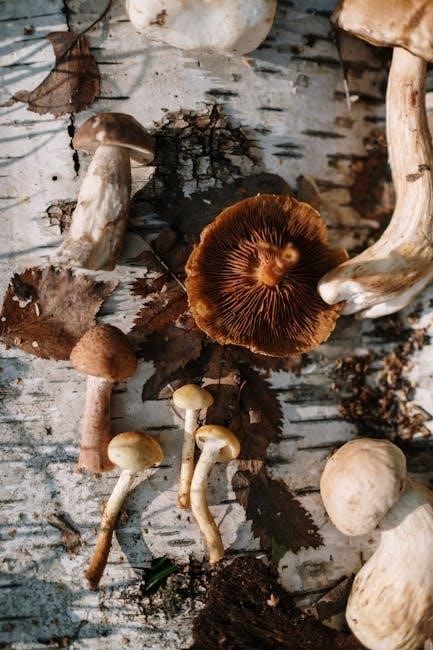
Precise identification relies on observing crucial characteristics! Examine cap shape, gill attachment, stem details, habitat, and spore print color for accurate species determination.
Cap Shape and Color
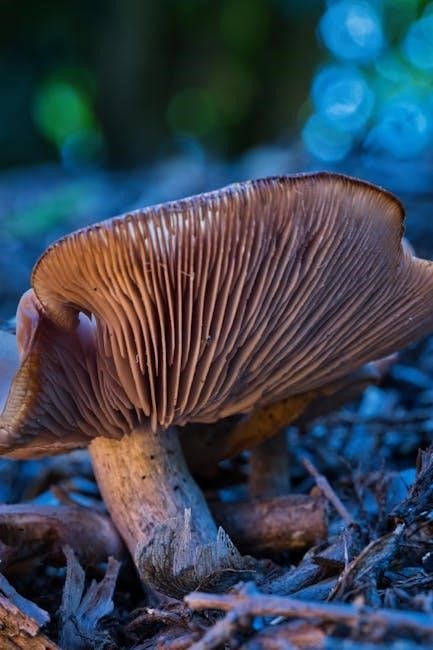
The mushroom cap offers vital clues for identification. Observe its form – is it convex, flat, umbonate (with a central bump), or depressed? Note the surface texture: smooth, scaly, or sticky.
Color is also significant, but can be variable. Document the cap’s hue accurately, considering any color changes with age or damage; Remember that color alone isn’t definitive, but combined with other features, it narrows possibilities.
Variations in shape and color can indicate maturity or species.
Gill Attachment and Spore Print
Examining how gills attach to the stem is crucial. Are they free, adnate (attached broadly), decurrent (running down the stem), or notched? This detail aids in narrowing down potential species.
A spore print reveals hidden characteristics. Place the cap, gills down, on dark and light paper overnight. The resulting spore color – white, brown, pink, or black – is a key identifier.
Careful observation of these features is essential for accurate identification.
Stem Characteristics
The stem, or stipe, offers vital clues for identification. Note its length, thickness, color, and texture – is it smooth, scaly, or fibrous? Does it have a ring (annulus) or a volva (cup-like structure at the base)?
The presence or absence of these features is significant. A volva, for example, is a key characteristic of some deadly Amanita species.
Carefully document these stem details alongside other features for accurate mushroom identification.
Habitat and Season
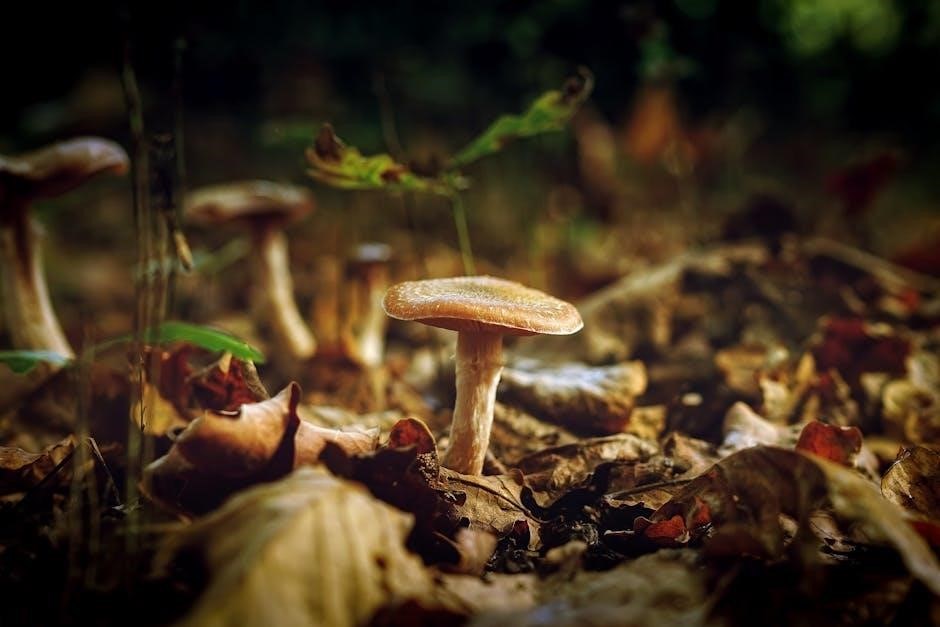
Understanding where and when a mushroom grows is crucial. Different species thrive in specific habitats – woodlands, grasslands, or near certain trees. Consider the substrate; does it grow on wood, soil, or leaf litter?
Seasonality is equally important. Many mushrooms have a limited fruiting period, appearing only in spring, summer, or fall.
Documenting both habitat and season narrows down possibilities and aids accurate identification.
Safe Foraging Practices
Prioritize safety! Forage with experienced mycologists, adhere to the “when in doubt, throw it out” rule, and always respect the delicate forest environment.
Foraging with an Expert
Learning from seasoned foragers is invaluable. Joining guided walks or workshops led by knowledgeable mycologists significantly reduces the risk of misidentification. Experts can impart crucial knowledge about local species, habitat preferences, and subtle distinguishing features.
They’ll demonstrate proper identification techniques, emphasizing the dangers of relying on simplistic rules. This mentorship fosters confidence and responsible foraging habits, ensuring a safe and enriching experience within the fascinating world of fungi. It’s the best starting point!
“When in Doubt, Throw it Out” Rule
This is the golden rule of mushroom foraging! If you have even the slightest uncertainty about a mushroom’s identity, do not consume it. Misidentification can have severe, even fatal, consequences, as many toxic species closely resemble edible ones.
Prioritize safety above all else. It’s far better to discard a potentially edible mushroom than to risk poisoning. Remember, the vast majority of mushroom-related deaths stem from incorrect identification.
Respecting the Environment
Sustainable foraging is crucial for preserving mushroom populations. Avoid disturbing the surrounding habitat – minimize trampling and leave no trace of your visit. Carefully harvest mushrooms, ideally cutting the stem with a knife to allow the mycelium to regenerate.
Never collect all the mushrooms in one area; leave some to reproduce. Be mindful of protected areas and adhere to all local regulations and permits. Responsible foraging ensures future harvests for everyone!
Mushroom Preparation and Cooking
Proper cleaning and cooking unlock mushroom flavors! Gently remove dirt, then sauté, roast, or incorporate into your favorite dishes for a delicious experience.
Cleaning Mushrooms
Cleaning mushrooms requires a delicate touch to preserve their quality. Avoid soaking, as they readily absorb water, becoming soggy. Instead, use a soft brush to gently remove any visible dirt or debris. A damp cloth can also be employed for a more thorough cleaning.
For stubborn dirt, a quick rinse under cool water is acceptable, but dry them immediately with a clean towel. Resist the urge to peel, as much of the flavor resides in the skin. Proper cleaning ensures a delightful culinary experience!
Cooking Methods
Mushrooms offer versatility in the kitchen, lending themselves to numerous cooking techniques. Sautéing highlights their earthy flavors, while roasting intensifies their umami notes. They’re fantastic in creamy sauces, hearty soups, and flavorful risottos.
Grilling imparts a smoky char, and frying creates a crispy texture. Remember, mushrooms shrink during cooking, so account for this when portioning. Experiment with herbs and spices to complement their unique taste!
Nutritional Value of Mushrooms
Mushrooms are energy-dense foods, packed with essential nutrients. They provide a significant source of calories and boast a rich profile of vitamins and minerals.
Energy Density
Mushrooms offer a surprisingly substantial energy boost for foragers. Data indicates that edible mushroom species range from approximately 190.49 to 335.84 Kilocalories per 100 grams.
This makes them a valuable food source, particularly during outdoor activities. Their caloric content, combined with their nutritional richness, provides sustained energy. This is especially important when foraging itself requires physical exertion and exploration of diverse terrains.
Rich in Nutrients
Beyond energy, mushrooms are packed with essential nutrients. They contribute vital vitamins and minerals to a balanced diet, enhancing overall well-being for those who enjoy foraging.
While specific nutrient profiles vary between species, mushrooms generally provide valuable compounds. These include proteins, fiber, and antioxidants, supporting a healthy lifestyle. Their nutritional value makes them a desirable addition to any meal, post-foraging adventure!
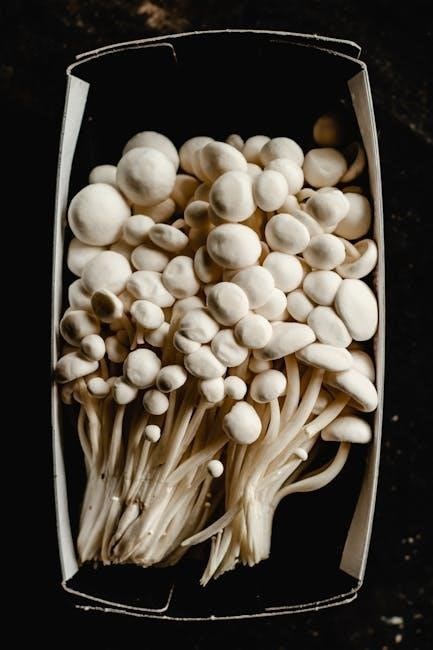
Legal Considerations for Foraging
Always check local regulations before foraging! Permits may be required, and understanding land ownership – private versus public – is crucial for responsible harvesting.
Permits and Regulations
Navigating foraging legality requires diligence. Many regions necessitate permits for collecting mushrooms, even on public lands. Regulations often vary by state, national park, or forest. Always research specific rules before heading out. Some areas restrict quantities, species, or foraging methods to ensure sustainability. Ignoring these rules can lead to fines or other penalties. Contacting local forestry departments or park services is vital for accurate, up-to-date information. Responsible foraging respects both the environment and the law.
Private vs. Public Land
Understanding land ownership is crucial for ethical foraging. Foraging on private property always requires explicit permission from the landowner. Trespassing is illegal and disrespectful. Public lands, like national forests, generally allow foraging, but with restrictions – check local regulations. State parks may have different rules than national parks. Always carry identification and be prepared to demonstrate knowledge of local foraging laws. Respect boundaries and leave no trace, regardless of land ownership.
Common Mistakes in Mushroom Identification
Avoid relying on simplistic rules and overlooking subtle details. Misidentification, especially with Amanita species, can be fatal; careful study is essential for safety.
Relying on General Rules
A common pitfall for novice foragers is trusting broad generalizations. Statements like “if it peels, it’s safe” are dangerously inaccurate and can lead to severe consequences. Mushroom identification demands meticulous observation of all characteristics – cap shape, gill attachment, spore print color, stem features, and habitat.
Ignoring unique traits and assuming a mushroom fits a simple rule drastically increases the risk of consuming a toxic species. Always cross-reference multiple features and consult reliable resources before making any decisions about edibility.
Ignoring Subtle Differences
Mushroom identification often hinges on recognizing seemingly minor details. Variations in gill color, stem texture, or cap ornamentation can distinguish a safe edible mushroom from a deadly look-alike. Overlooking these subtle nuances is a frequent cause of misidentification and poisoning.
Beginners must train their eyes to observe closely and appreciate the spectrum of variation within species. Detailed field guides and expert guidance are crucial for learning to discern these critical differences.
Resources for Further Learning
Expand your mycology knowledge! Explore online forums, connect with local mycological societies, and continue learning to enhance your foraging skills and safety.
Online Forums and Communities
Dive into vibrant online spaces dedicated to mycology! Numerous forums and communities offer invaluable platforms for sharing knowledge, asking questions, and connecting with fellow enthusiasts.
These digital hubs are brimming with experienced foragers eager to assist beginners with identification challenges and offer guidance on safe foraging practices. Active participation allows you to learn from diverse perspectives, stay updated on local finds, and contribute to the collective understanding of the fascinating fungal world.
Remember to always verify information with multiple sources!
Local Mycological Societies
Enhance your foraging expertise by joining a local mycological society! These organizations provide a fantastic opportunity for hands-on learning through guided forays, workshops, and presentations led by experienced mycologists.
Societies foster a collaborative environment where you can connect with like-minded individuals, share discoveries, and deepen your understanding of local fungal ecosystems. Participating in organized forays offers invaluable field experience and expert identification assistance, significantly improving your skills and safety.
It’s a great way to learn!
Mushroom Look-Alikes
Beware of deceptive fungi! Identifying false Chanterelles and distinguishing between safe and toxic species requires careful attention to detail and expert knowledge for safe foraging.
Identifying False Chanterelles
Distinguishing false chanterelles is crucial for safe foraging. Unlike true chanterelles, these imposters often possess distinct, well-defined gills that fork and run down the stem – a key difference. True chanterelles have blunt, forked ridges.
False chanterelles typically exhibit a paler, less vibrant color, and their flesh may bruise slightly pinkish when damaged. Always examine the cap’s texture; false chanterelles can feel smoother and less velvety than their edible counterparts. Careful observation of these features is paramount.
Distinguishing Safe from Toxic Species
Accurate identification is paramount when foraging for mushrooms. The majority of mushroom-related fatalities stem from misidentification, particularly with Amanita species like the Destroying Angel.
Focus on key features: cap shape, gill attachment, spore print color, and stem characteristics. Never rely on general rules; subtle differences can be critical. When in doubt, discard the mushroom – the “when in doubt, throw it out” rule is your safest bet. Prioritize learning from experts.
The Future of Mushroom Foraging
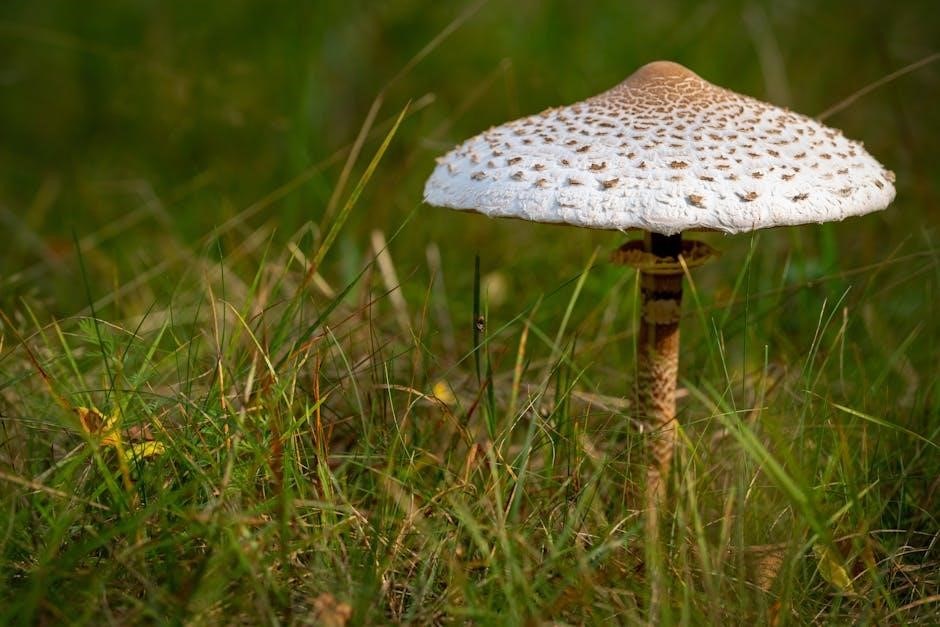
Sustainability and conservation are vital for the future of foraging. Growing interest demands responsible practices to protect these fascinating fungi and their habitats for generations.
Sustainability and Conservation
Responsible foraging is paramount to ensuring the longevity of mushroom populations. Avoid over-harvesting, leaving some mushrooms undisturbed to reproduce. Practice “scatter-sporing” – gently breaking caps to release spores as you move through the forest.
Respect the delicate ecosystem; minimize your impact by sticking to established trails and avoiding trampling surrounding vegetation. Consider joining local mycological societies actively involved in conservation efforts. Educate others about sustainable practices, fostering a community dedicated to protecting these incredible resources for future enjoyment.
Growing Interest in Foraging
A renewed appreciation for wild foods is fueling a surge in mushroom foraging. This rising interest stems from a desire for locally sourced, sustainable food and a connection with nature. People are captivated by the diversity and unique flavors mushrooms offer, moving beyond supermarket varieties.
Social media and online communities play a significant role, sharing knowledge and inspiring others. However, this increased popularity necessitates a greater emphasis on education and responsible foraging practices to protect vulnerable species and habitats.